A bloated, prize-winning koi carp gasping out its last air on the manicured astroturf of a Surrey golf club is a spectacle of dry, useless panic. Nobody helps the fish; they simply adjust their visors and re-evaluate their bets. Something similarly suffocating was staged in Warsaw, where Polish Prime Minister Donald Tusk leaned across a podium to inform parliament that intelligence assessments suggest Russia might launch a missile or drone strike against NATO territory within "months, not years." The objective, Tusk warned, was to prove that Article 5 is a legalistic fiction.
The mainstream press dutifully amplified the gong of doom. Baltic intelligence chiefs nodded in grim consensus: the red tide is rising, and the timeline has collapsed from decades to weeks. Yet beneath the solemnity of national security briefings lies an unvarnished commercial reality. Threat timelines are not merely strategic prognoses; they are purchasing schedules. To say a war is ten years away is to invite parliamentary committees to debate procurement budgets with the leisurely pedantry of retired accountants. To say an attack is months away is to hand defense contractors the keys to the treasury.
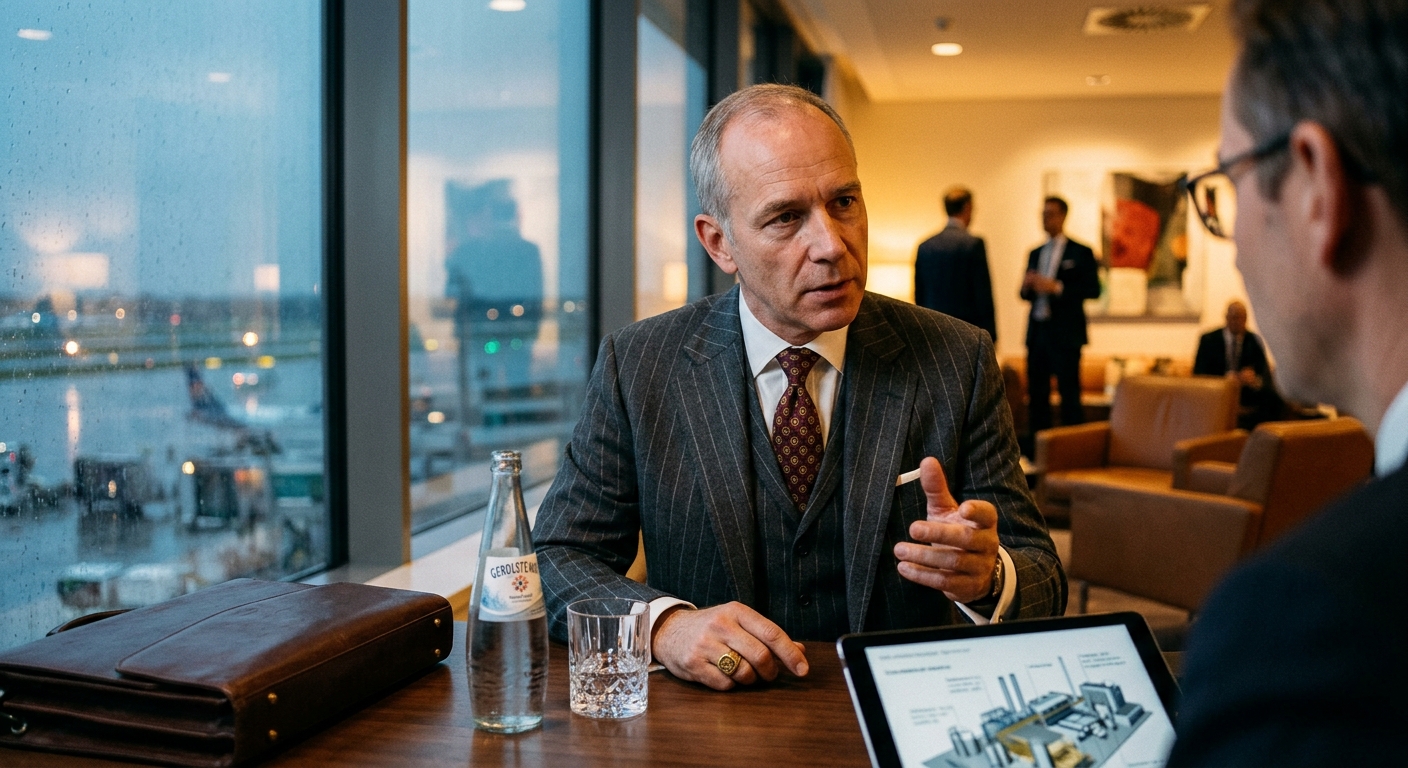
In the air-conditioned executive lounges of Munich, London, and Warsaw, the men who sell artillery shells do not wear fatigues. They wear chalk-striped wool, sport signet rings, and speak of "capacity ramp-ups" over chilled mineral water. For European defense giants—from BAE Systems and Rheinmetall to the state-backed leviathan Polska Grupa Zbrojeniowa (PGZ)—the apocalyptic cadence from intelligence agencies is the sound of an open tap. Poland’s defense spending has soared toward five percent of GDP, a figure that makes welfare budgets look like rounding errors. An emergency timeline erodes oversight. It converts cautious state procurement into panicked impulse buying, where non-competitive contracts are signed before the ink on the intelligence summary is even dry.
It would be neatly comforting to dismiss this entirely as a corporate conspiracy written by defense lobbyists in Brussels steakhouses. The reality is messier. Russia’s grey-zone war in Europe is not an invention of military sales directors. Security services across the continent have documented a genuine spike in state-backed arson targeting logistics hubs, electronic jamming over Baltic airspace, and cyber probes aimed at power grids. The threat is physical, cheap, and persistent.
Here, however, lies the absurd loop of Western posture. Even as European intelligence officers leak terrifying timetables to journalists, they quietly admit that public panic is precisely what the Kremlin wants. Moscow’s asymmetric strategy relies on creating the illusion of omnipresent menace, forcing NATO societies into a state of demoralized paralysis. By broadcasting hyper-specific, short-term warnings of imminent strikes on NATO soil, European leaders are doing the Kremlin’s psychological heavy lifting for it. They generate the terror Vladimir Putin seeks to sow, while simultaneously using that terror to justify long-term defense expenditures that cannot possibly yield deployed weapons within the claimed "months" window.
Fear is a high-margin commodity. You cannot manufacture an integrated air-defense battery in ninety days, but you can pass an emergency appropriations bill in ninety minutes. The irony of the "months, not years" timeline is that it solves a political and financial problem, not an operational one. It browbeats reluctant Southern European allies into meeting NATO spending targets and secures multi-billion-euro order books for domestic munitions makers.
Whether Moscow intends to cross the border with a swarm of kamikaze drones this winter remains an unverified proposition—a piece of strategic communication as much as an intelligence fact. What is entirely verified is who collects the dividend. As the political class in Warsaw wraps itself in the language of existential defense, the arms manufacturers sit quietly in the back row, counting the proceeds of a panic they didn't have to write, but are more than happy to monetize.